
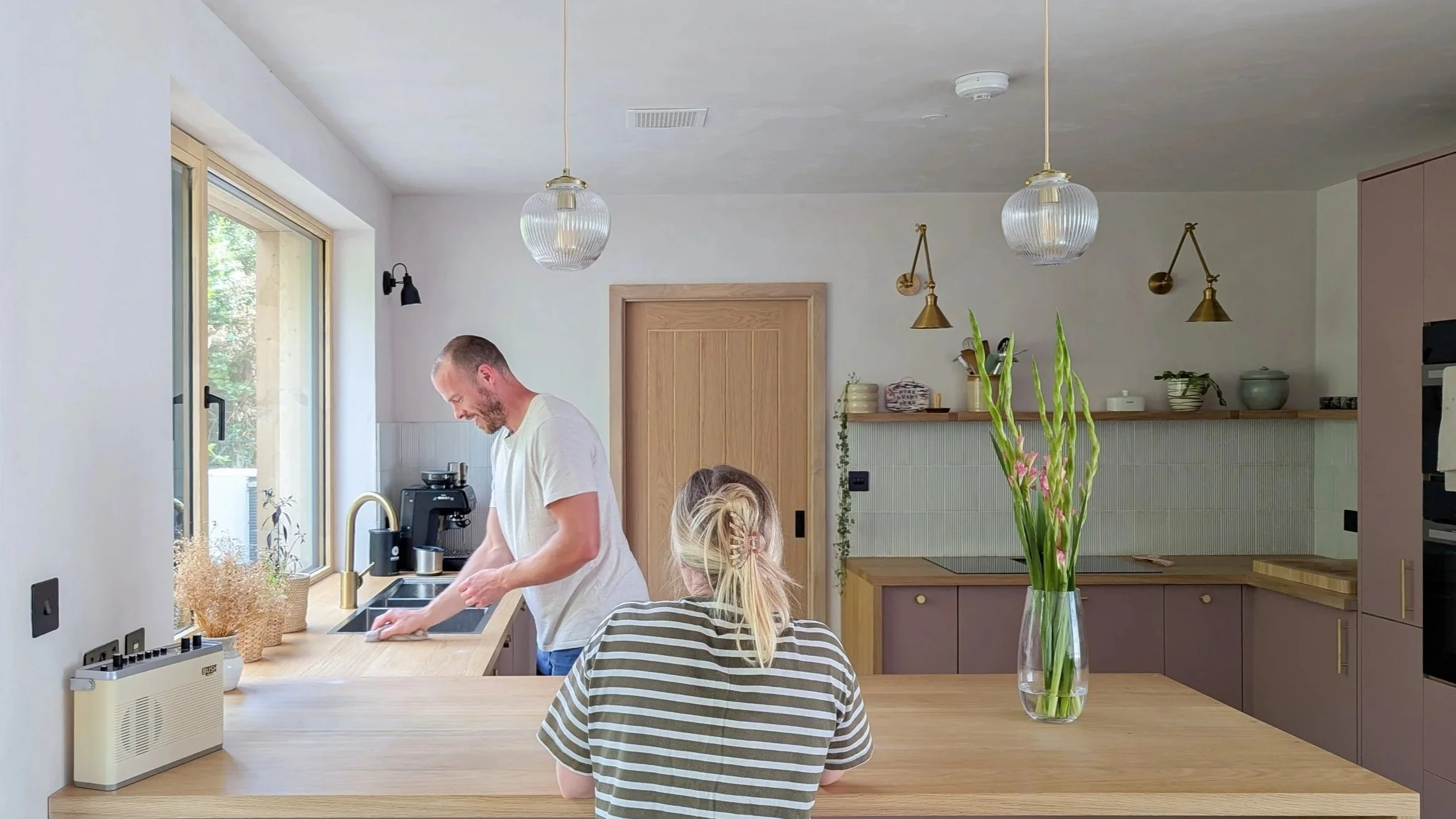
From bespoke extensions to ambitious low carbon new builds, we provide architectural solutions rooted in sustainable design principles.
Residential
We work on a variety of residential projects to help clients realise their vision and take a considerate and caring approach to the people we work with, the places where we work and the people who use them. Co-design and co-creation play a fundamental role in our projects creating a symbiotic process allowing the team to share skills and knowledge whilst gaining new perspectives and inspiration by enabling the creative process of others. Our practice is dedicated to Passive House standards, sustainable retrofits and conscious materiality.
Following RIBA Stages 0-7, we have detailed below how we typically work on residential projects.
If you have a project you would like us to work on, please get in touch, or see our pricing page on how to get started.
-
Bringing clarity to your project before commissioning further surveys and design work.
Site visit: to meet you in person and assess your project in context.
Initial Sketches: to help visualise potential design options.
Project brief development: evaluate your brief or help to create one.
Video call: to discuss design options and next steps. -
Creating a concept that aligns to your brief.
Design development: Concepts tested within a 3D model and developed in accordance with your feedback.
Drawings: Production of existing and proposed drawings for planning approvals.
Planning: Prepare and submit necessary applications. -
Technical development that impacts quality.
Technical Drawings: Produce a drawing pack for construction pricing.
Material and Specification: Full specification for necessary information to provide accurate tenders.
Liaison with third parties: Structural engineer, building control, party wall surveyors.
Regulations: Submit and obtain building regulation approvals. -
Ensuring every detail endures.
Contract administration: oversight of building works and payment certificates.
Review and feedback: on construction progress or potential design changes.
Site monitoring: to ensure progress and design compliance.
Completion: Achieving a successful project outcome. -
Assessing the living experience.
Operational efficiency: ensure your project meets design performance.
Evaluation and feedback: assess your satisfaction and feedback with any lessons learned.
Data updates: Analyse information to reflect any alterations or improvements.